In data centers, racks and enclosures serve as the foundational structure for organizing, securing, and optimizing the deployment of IT equipment like servers, networking devices, and storage systems. Here’s how different types of racks and enclosures are utilized:
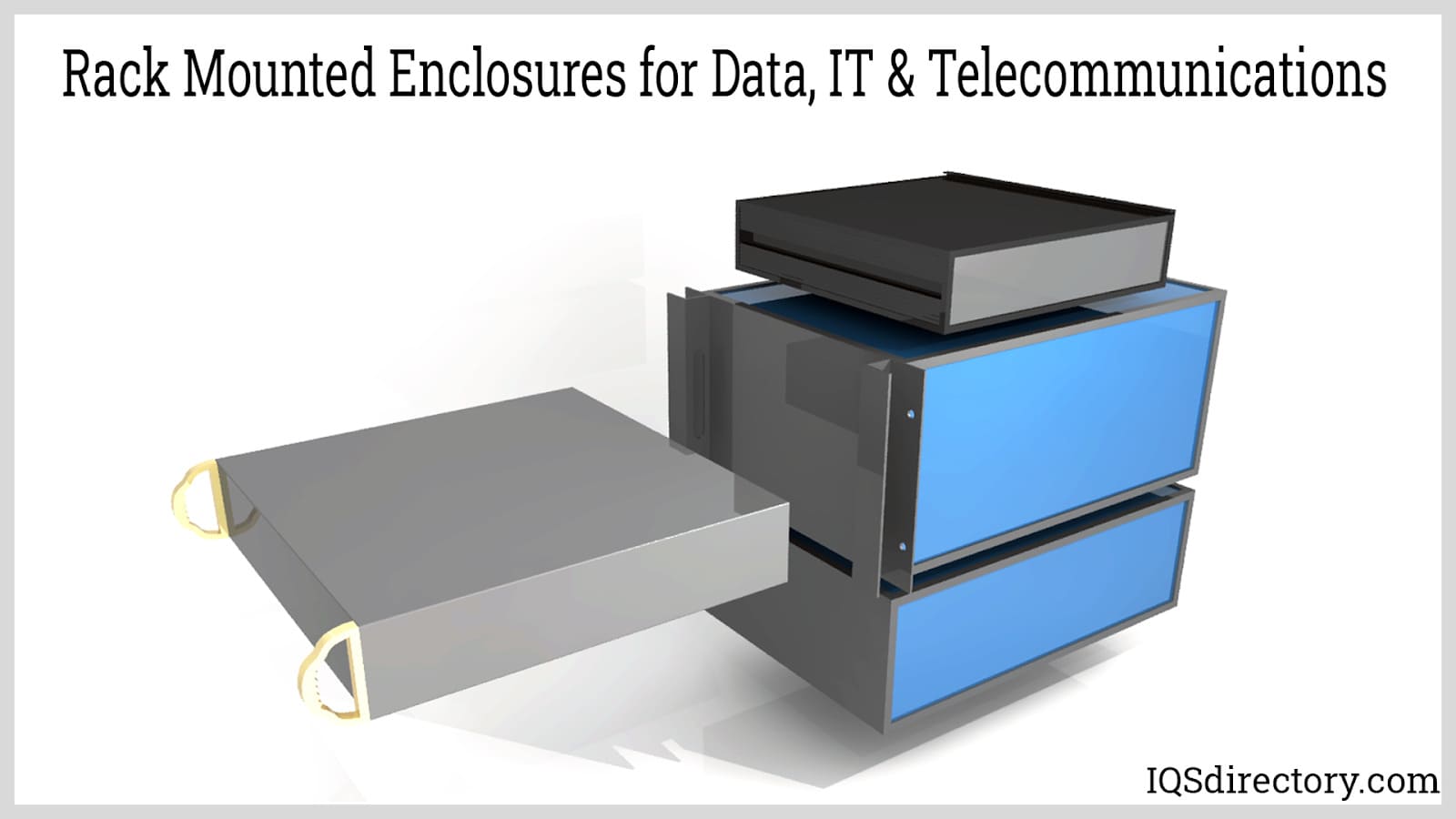
Server Racks
- Design: Server racks are standardized frames designed to hold servers and other IT equipment in a vertical configuration. They typically come in widths of 19 inches (48.26 cm) or 23 inches (58.42 cm) and are measured in “U” units, where 1U equals 1.75 inches (4.45 cm) in height.
- Usage in Data Centers:
- Organization: They provide a structured way to arrange equipment vertically, which simplifies cable management, airflow, and access for maintenance.
- Scalability: Allow for easy expansion or scaling of infrastructure by adding more servers or equipment into additional rack space.
- Cooling: Designed with considerations for airflow, often with perforated doors or open fronts to facilitate cooling.
- Standardization: Adhere to industry standards for equipment compatibility, making it easier to integrate new technology or replace components.
Cabinets (Enclosed Racks)
- Design: Cabinets are essentially enclosed server racks with doors and side panels, offering additional security and protection from dust, noise, and unauthorized access.
- Usage in Data Centers:
- Security: Provide a locked environment to safeguard sensitive equipment, especially in shared or public data center spaces.
- Environmental Control: Help in controlling the internal environment by reducing dust ingress and sometimes include features for temperature and humidity management.
- Aesthetics and Order: Offer a cleaner look which can be important in environments where appearance matters or where equipment needs to be out of sight.
- Cable Management: Often come with built-in systems or provisions for better cable organization, reducing clutter and improving airflow.
Open Frames
- Design: Open frame racks are essentially the skeletal structure without side panels or doors, providing maximum airflow and ease of access.
- Usage in Data Centers:
- Airflow: Excellent for environments where cooling is critical, as they allow air to pass through freely, reducing the risk of heat buildup.
- Accessibility: Ideal for scenarios where quick access to equipment is necessary, like in testing labs or areas where equipment is frequently changed or maintained.
- Cost-Effectiveness: Generally less expensive than enclosed cabinets since they use fewer materials and offer less protection, suitable for secure, controlled environments where physical security isn’t a primary concern.
- Flexibility: Can be easily adjusted or expanded due to their open design, accommodating different heights or types of equipment.
Integration and Operation:
- Rack Layout: The layout of racks within a data center is planned with considerations for power distribution, cooling efficiency, cable routing, and access pathways. For instance, hot and cold aisle containment strategies are often employed, where racks are arranged to direct hot air exhaust and cold air intake efficiently.
- Weight and Load: Racks are selected or designed based on the weight capacity needed to support the equipment, ensuring structural integrity under load.
- Security: For cabinets, security features like key locks, electronic locks, or biometric systems might be implemented based on the sensitivity of the housed equipment.
- Cabling: Efficient cable management within and between racks is crucial to maintain performance, reduce cable clutter, and ensure proper airflow.
- Modularity: Some data centers use modular rack systems where racks can be quickly assembled or disassembled, facilitating changes in infrastructure layout or scaling operations.
- Cooling Integration: The choice between open frames, server racks, or cabinets often influences cooling strategies. For example, open frames might be used in areas with in-row cooling or where air flow needs to be maximized.
Each type of rack or enclosure plays a specific role in optimizing the physical environment of a data center, balancing between security, accessibility, cooling efficiency, and space utilization. The selection depends on the operational needs, security requirements, and the overall design philosophy of the data center.